Growing up, we are taught that worm poo is soil. But this type of byproduct soil (a.k.a. worm castings, hummus, manure) from your vermiculture is different than the regular dirt that you find in your yard in that it is extremely nutrient rich. Its nutrient content is based on the scraps you feed your worms. Scraps should be plant-based, for animal-based products will rot and become rancid by nature from bacteria and microbial breakdown. Because worm castings are so nutrient rich, they cannot be used for planting directly. The high nutrient content will quickly burn the plant up, so to speak, initiating a nutrient overload. Mix worm castings with regular potting soil (50:50), or sprinkle on the top of the soil of planted plants. During watering, nutrients will leach from worm castings and absorb into the surrounding soil to be taken up by the plant. It can also be used to make worm tea--though definitely not recommended for personal consumption.
Below you can find a video that best describes the assembly of your own vermiculture bin and pictures of my own bin that lives outside on my porch. Be aware of outside temperatures if you also choose to leave your vermiculture bin outside. Ideal temperatures for your worms are 59-77 degrees Fahrenheit. Keep your bin out of the sun and away from any water sources. As seen in the below video, vermiculture bins can also be kept inside.
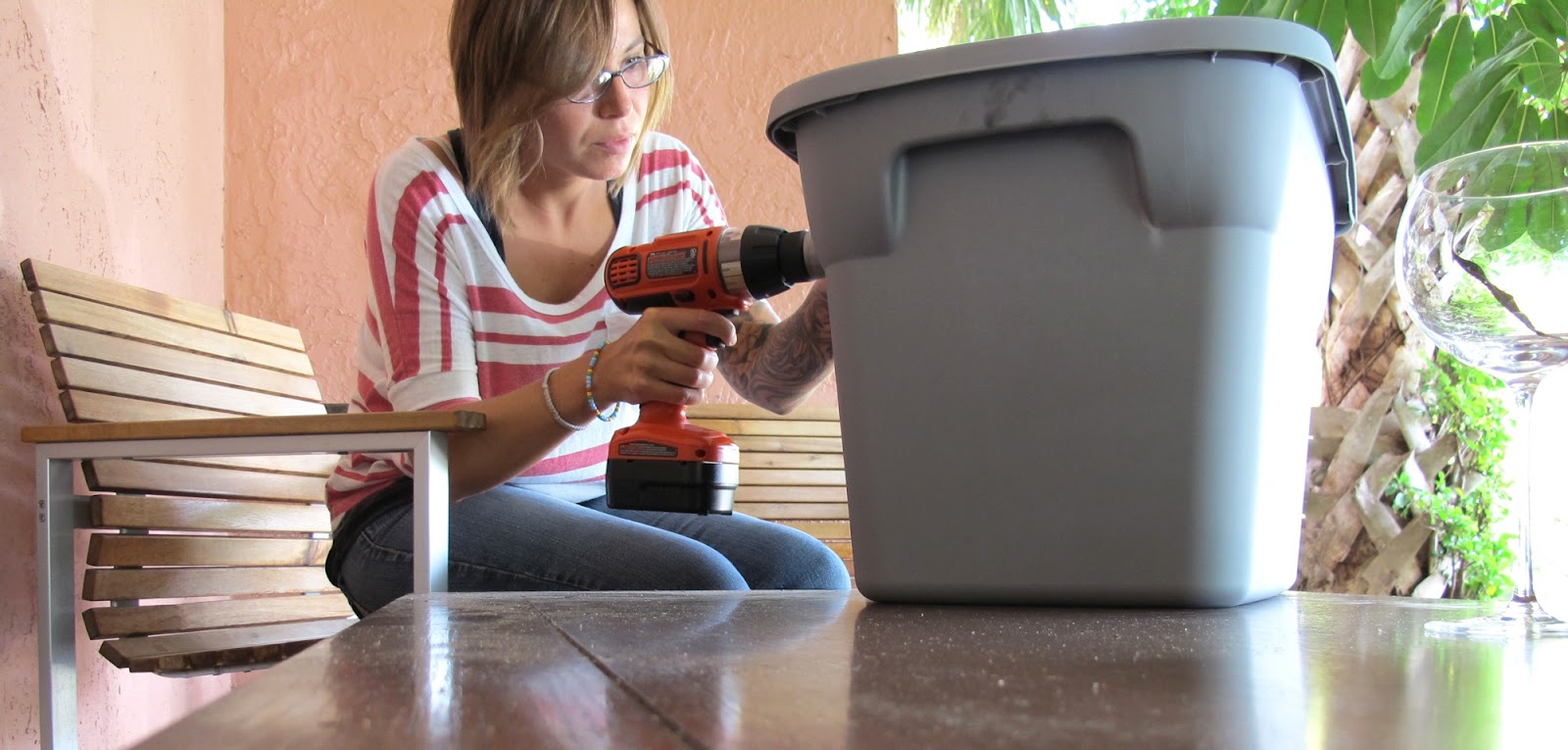
Drilling aeration holes for worms.
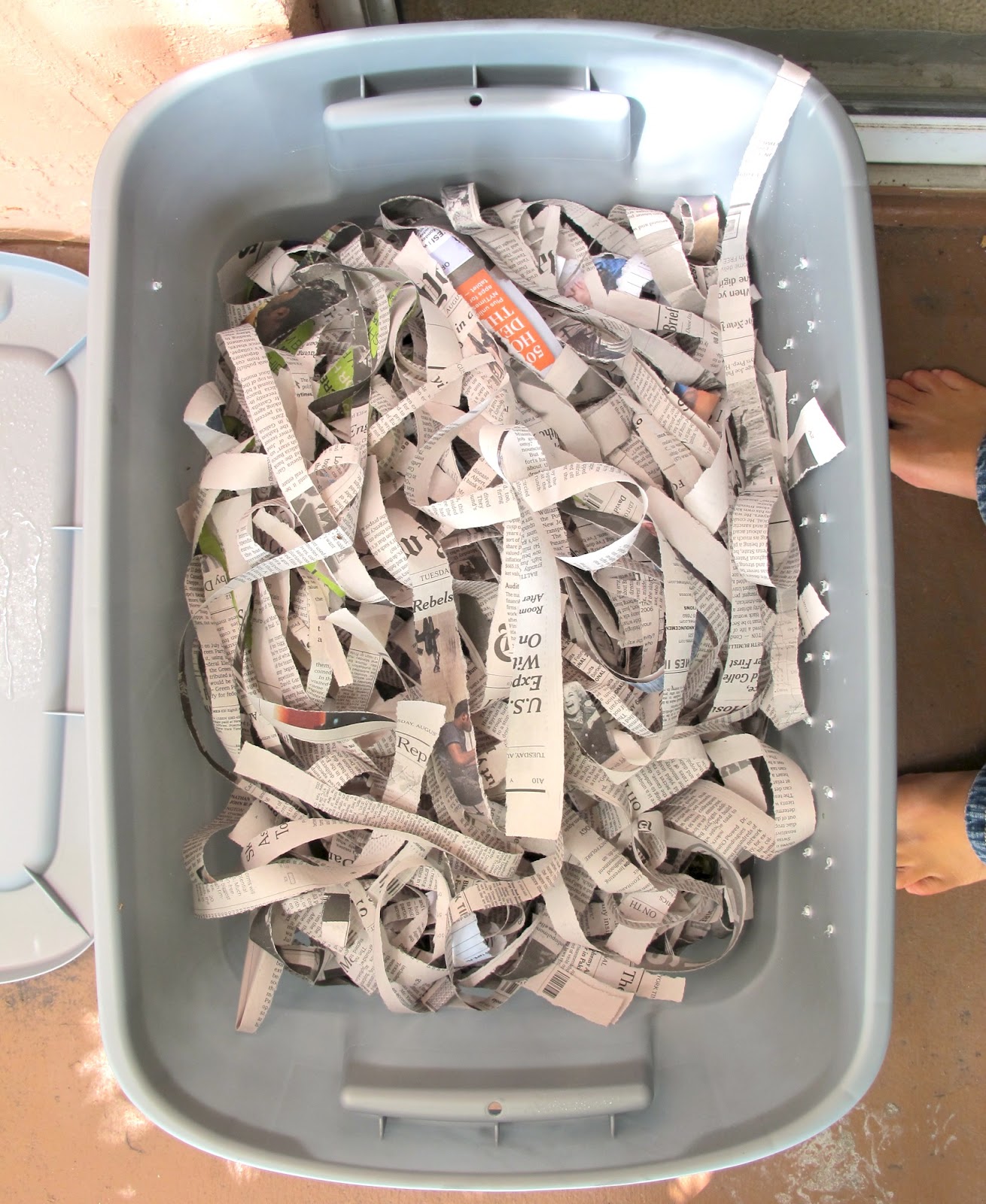
Layering of bin, from top to bottom:
| 1/2 dry shredded newspaper 1/8 food scraps 1/8 worms and castings 1/4 moist newspaper |
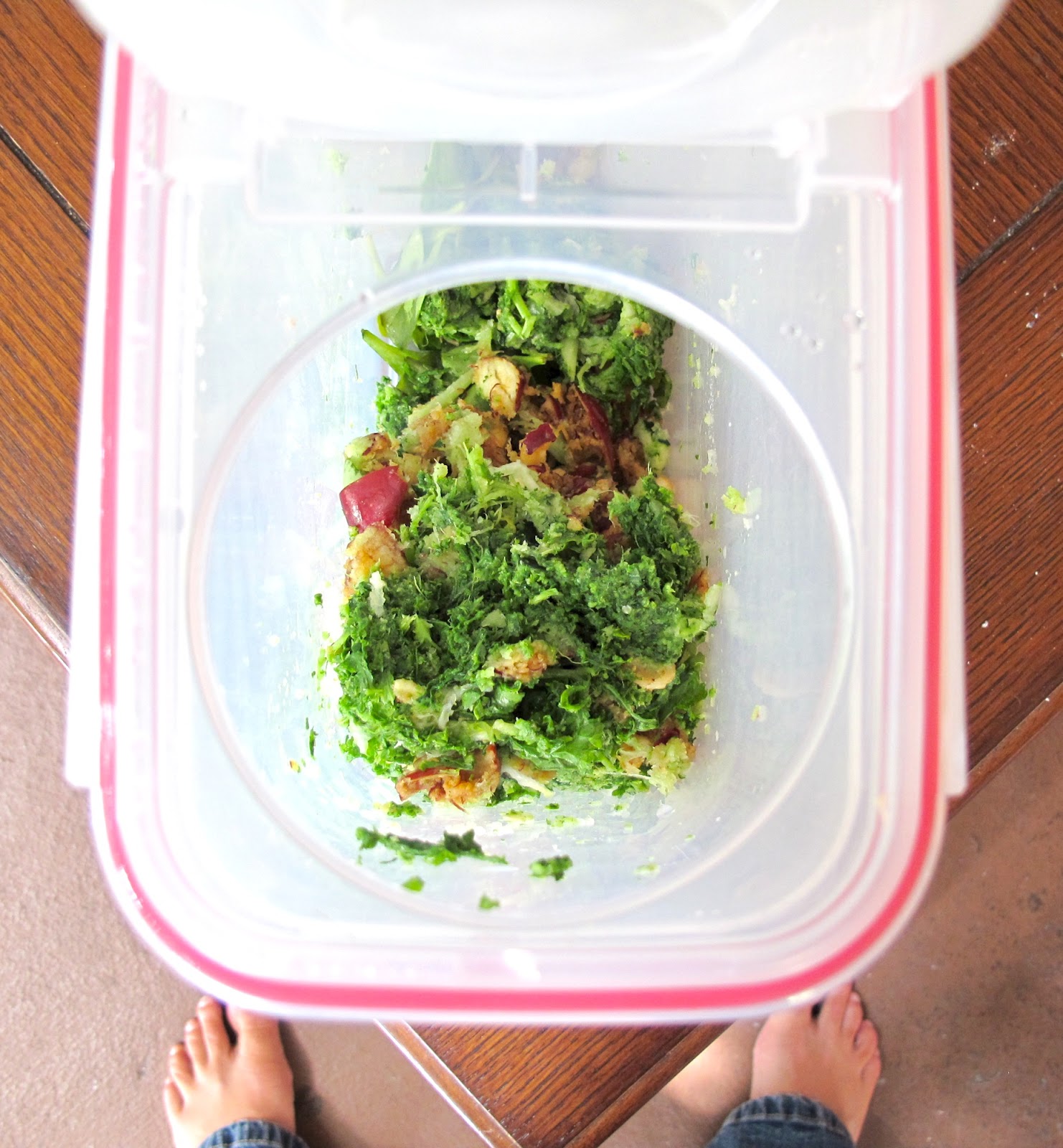
Juice pulp and other fruit and vegetable food scraps that will go into worm bin.
Feed your worms: paper products like napkins, shredded paper bags and newspaper, handbills, paper coffee cups (remove wax liner after a week or two), Chipotle bowls (remove plastic liner after a week or two), coffee liners, tea bags; fruit and vegetable fleshes or wastes (even avocado skins, and melon or squash rinds)
Do not feed your worms: meat, dairy, eggs (egg shells can be ok), fatty foods/oils, large amounts of onions, garlic, or peels; large amounts of citrus--think high acidic foods.
Add any scraps in moderation. Worm's kinetic energy produces heat and it is not good to overheat the bin. Save food scraps in a sealed container until full.
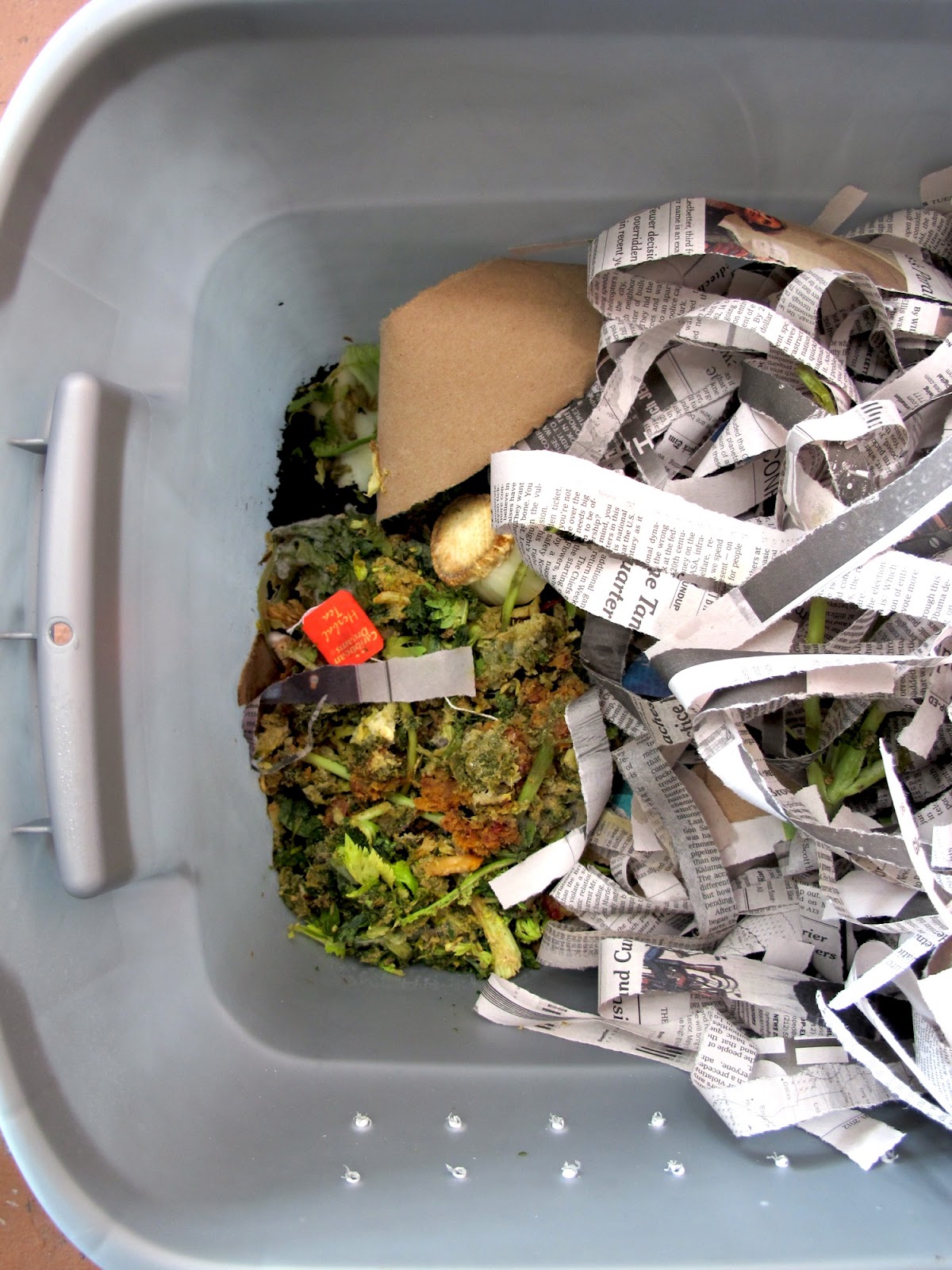
These pictures only show one set of holes on one side of the worm bin because the battery to my drill died. I'll drill the other side and the bottom mañana.
Happy cultivating!
Still have questions? Check out here.
No comments:
Post a Comment