Yuca & Cassava
Family: EuphorbiaceaeScientific Name: Manihot esculenta
Common Name: cassava, Brazilian arrowroot, manioc, tapioca
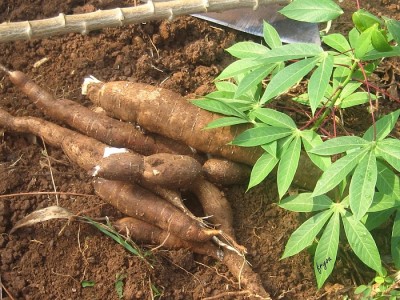

'Yuca' is the Spanish word referring to cassava. It is a starchy tuberous root that grows similarly to a potato, and is a main source of sustainable carbohydrates for many cultures. Yuca/cassava can be bitter or sweet, where the bitter varieties contain more toxic antinutrients, like cyanide. It is important to properly prepare the root vegetable or it may lead to acute cyanide intoxication, goiters, and even ataxia or partial paralysis. Proper preparation and awesome recipes can be found here.
Dried yuca/cassava is what we know as tapioca, which is used as a thickening agent in various recipes. Yuca/cassava is high in calcium, phosphorus vitamin C, thiamine, riboflavin and nicotinic acid, but is not a good source of protein. The yuca/cassava leaves are a more sufficient source for protein. The root is also used in a variety of alcoholic beverages in the tropics: Cauim and tiquira (Brazil), kasiri (Sub-Saharan Africa), Impala (Mozambique) masato (Peruvian Amazonia chicha), parakari or kari (Guyana), nihamanchi (South America) aka nijimanche (Ecuador and Peru), ö döi (chicha de yuca, Ngäbe-Bugle, Panama), sakurá (Brazil, Surinam).
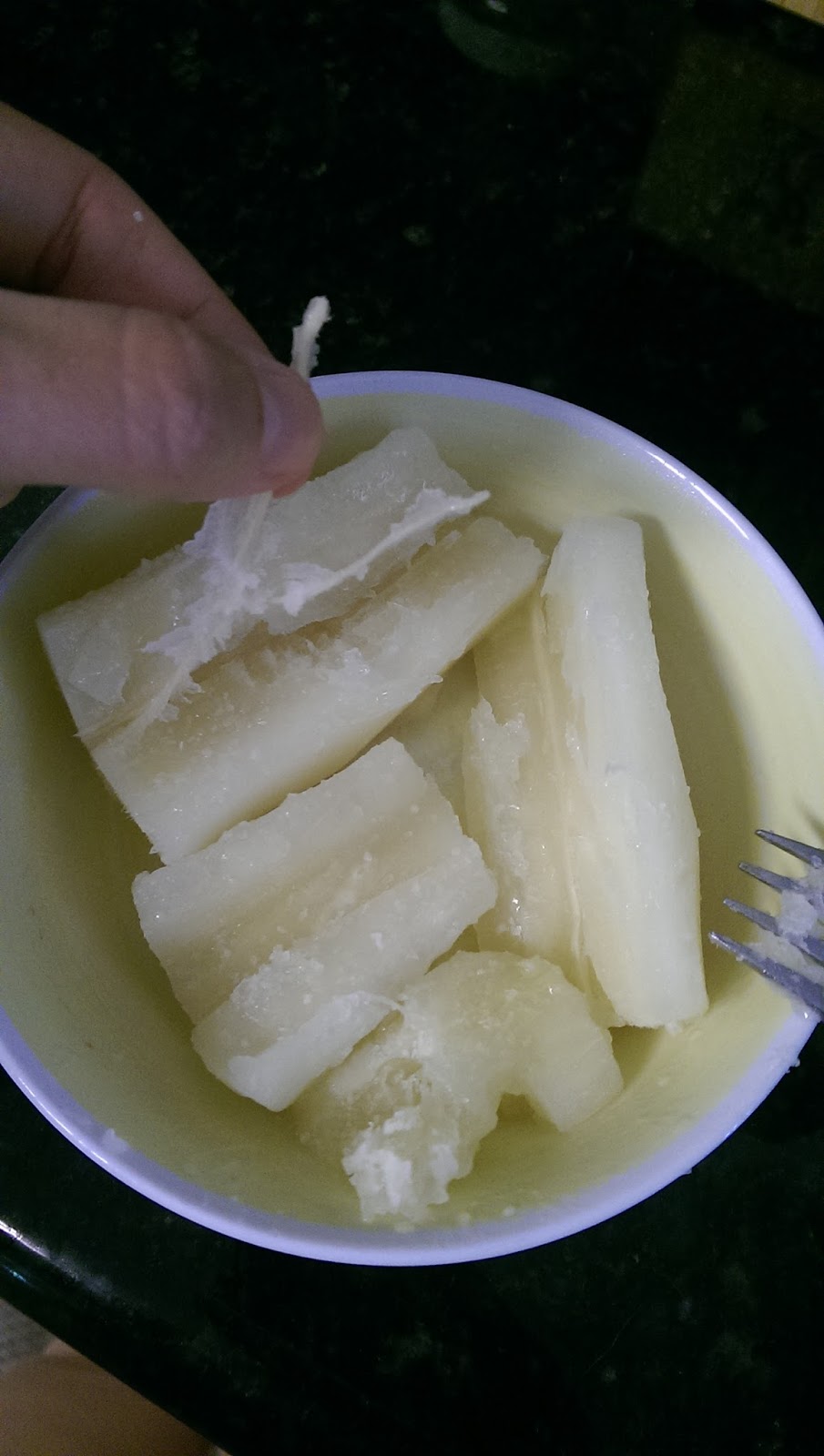
The simplest way for me to prepare yuca/cassava in Miami is to just buy it in the frozen food section. The root has already been peeled and cooked, therefore it only takes a few minutes to toss the frozen pieces in a pot of boiling water until fork tender. Once tender, season how you like. Or, after boiling you can fry it up into fries. Either way, remember to remove the woody stem in the center of the yuca/cassava. It's not very edible.

Yucca
Family: AsparagaceaeScientific Name: Yucca spp
Common Name: Yucca, Spanish bayonet, Our Lord's candle, Joshua tree, Adam's needle


The name yucca applies to as many as 40 species of trees and shrubs found mostly in arid portions of North America. Yucca plants are characterized by stiff, evergreen, sword-shaped leaves crowded on a stout trunk. Some varieties, like the Joshua tree can reach 60 feet in height. In the center of the plant, there is a dense terminal flowerhead faintly resembling a candle stick. The flowers are white or greenish, and depend on nocturnal yucca moths for pollination. Each variety of moth is adapted to a single species of yucca.
For centuries, yucca plants have served American Indians for a variety of uses including fiber for rope, sandals and cloth; the roots have been used in soap. The Indians and early Californian settlers used the green pods for food. Indian uses included boiling and baking the fruits, eating the blossoms, chewing the raw leaves and fermenting the fruits to produce a beverage for rituals.
References
https://en.wikipedia.org/wiki/Cassavahttp://www.drugs.com/npc/yucca.html
Image Sources
Yuca & Cassava - shelookbook.com; http://sattvamji.blogspot.com/2014/10/78-cassava-or-maniok-root-one-more.htmlYucca - swbiodiversity.org; Maja Dumat
No comments:
Post a Comment